Soccer Bag Tags: The Definitive Guide To Keeping Gear Organized On Every Pitch

On a crowded sideline, twenty identical backpacks and ball bags can look exactly the same. The only difference between “I’m ready for kickoff” and “Where’s my stuff?” is what is hanging from the handle.
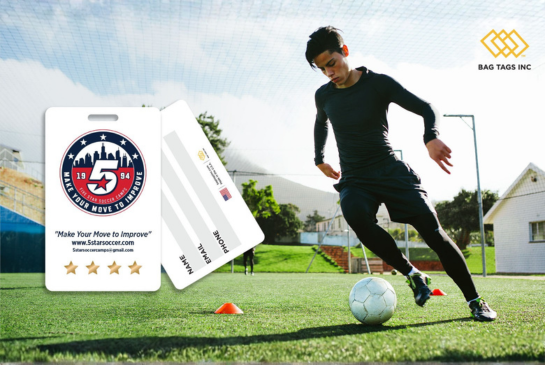
Soccer bag tags turn that chaos into a system. A small, durable plastic tag with a clear name line, jersey number, and team identity makes it faster to spot gear, return lost items, and give players a keepsake that lasts long after the season ends.
This guide walks you through how to design effective soccer bag tags, choose finishes and attachment hardware, and roll them out cleanly for your club, school, or tournament.
What Soccer Bag Tags Are And Why They Matter
Soccer bag tags are durable plastic luggage tags customized for teams, clubs, or events. They typically ride on:
- Player backpacks and duffels
- Ball bags and equipment bins
- Coach and trainer kits
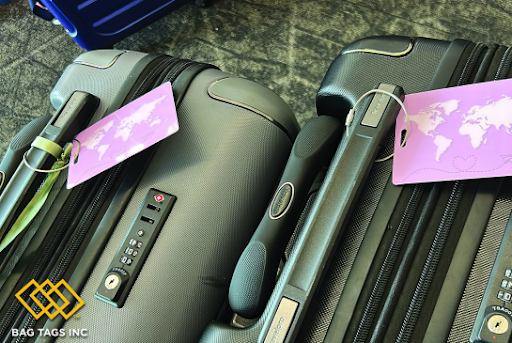
- Travel luggage for tournaments and showcases
At Bag Tags, tags for sports programs are designed to survive travel, weather, and repeat use, while doubling as a small badge of pride. Many athletes keep them on their bags for years, long after the final whistle.
If your tag design can be identified at a glance, survive real use, and provide a clean return path, it will work in real sideline conditions.
Here is how that plays out on a typical match day:
A lost backpack in the parking lot, a ball bag left on the far field, or a coach’s kit loaded onto the wrong bus are all routine problems. A high contrast soccer tag with a clear name line and QR code gives parents, field marshals, and tournament staff something they can act on in seconds instead of guessing.
Design Rules For Soccer Name Tags That Actually Work
Think of soccer name tags like simple safety signage that also looks good: clear, consistent, easy to scan.
Start With the Information Hierarchy
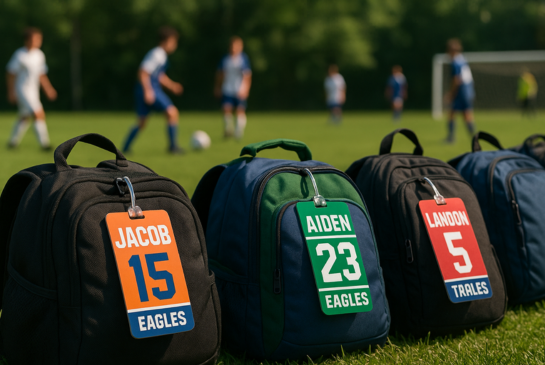
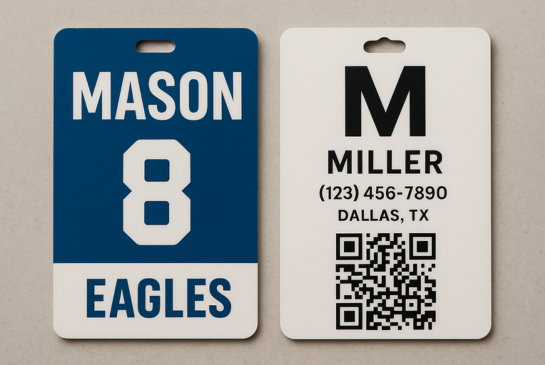
On the front of the tag, focus on fast recognition:
- Player first name and large jersey number
- Club or team name
- Optional: age group or division (U10, U14, Varsity, etc.)
On the back, add contact and recovery info:
- First initial and last name
- One primary contact method (phone or email)
- City and state or city and country
- A QR code that can route to a team or club page, not a full home address
Avoid printing full street addresses on the outside of the tag. City and country are enough for recovery, and QR codes can handle private details on a secure page instead.
Color, Contrast, and Logos on Soccer Tags
Logos matter, but not more than legibility.
For soccer tags, a good layout usually follows this pattern:
- Solid or lightly patterned background
- High contrast text (white on dark, dark on light)
- Logo sized so it supports the name line instead of crowding it
- QR code placed on a clean, solid patch of color
A few practical tips:
- Put the player name or number on the top half of the tag so it is visible even if part of the tag tucks behind a handle.
- If your team color is dark (navy, forest, maroon), use a lighter panel behind the text.
- Avoid thin scripts or condensed fonts. A simple sans serif reads best at a distance from the bench or bus.
For a sport-wide overview of layouts and best practices, see our bag tags for sports guide.
Finish & Loop Choices For Soccer Bag Tags
Bag Tags focuses on durable plastic tags in two finishes and two loop types:
- Glossy plastic
- Matte plastic
- Clear plastic loops
- Premium stainless steel loops
There is no “right” answer for everyone, but certain combinations perform better in typical soccer environments.
Glossy vs. Matte Around the Pitch
Glossy finish
- Colors and logos look bold and saturated
- Wipes clean quickly after dusty or muddy days
- Can pick up glare in bright sun or stadium lights
Best for:
- Player bags on indoor futsal courts or shaded benches
- Gift-style tags for end-of-season recognition kits
- Travel luggage for showcase tournaments where visual pop matters
Matte finish
- Low reflection and easy to read at most angles
- Hides fingerprints and small scuffs
- Has a more understated, “working gear” look
Best for:
- Outdoor fields with bright noon sun
- Coaches’ cases and shared equipment that get tossed into vans
- School and university gear rooms where readability beats gloss
A simple rule:
- Choose matte when speed and legibility in tough light matter most.
- Choose glossy when you want a more polished kit look and quick wipe downs.
Clear Plastic Loops vs. Stainless Steel Loops
Attachment is where many tag programs fail. A weak loop cancels a strong design.
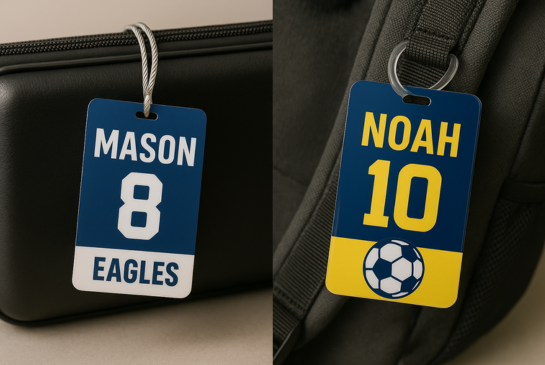
Clear plastic loops
- Flexible and quick to attach in bulk
- Great for player backpacks, duffels, and drawstring bags
- Comfortable on soft handles and straps
Use them when:
- Players will mostly handle their own bags.
- You want easy swap outs between seasons or teams.
Stainless steel loops
- Premium strength for heavy or shared gear
- Ideal for ball bags, med kits, and trunk-style equipment cases
- Hold up well to airline baggage systems and repeated bus loading
Use them when:
- Gear rides in shared bins or underneath buses.
- You need tags to stay put for multiple seasons.
Using QR Codes On Soccer Tags Without Overcomplicating Things
You do not need smart chips or tap-based tech for soccer tags to work in the real world. Bag Tags emphasizes printed plastic tags paired with QR codes because they are low cost, universal, and work with any modern phone camera.
Here is what a simple, reliable QR setup looks like:
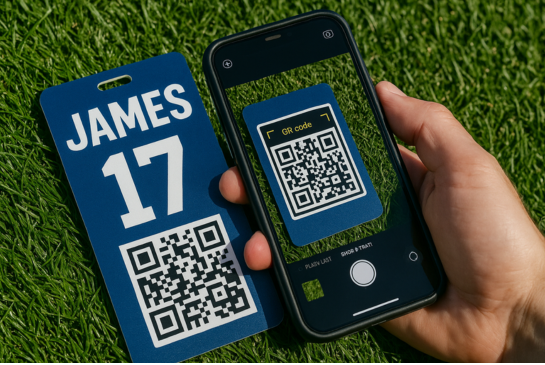
- Place the QR on the back or lower corner of the front.
- Keep at least one “quiet zone” of space around it.
- Test the code from arm’s length on multiple phones before you approve proofs.
Where can the QR code point?
- A basic recovery form that emails the team manager
- A club page with contact details and a short “If you found this bag” note
- Tournament schedule and field maps
- A sponsor page that helps fund your program
For tournaments or summer camps, you can even reuse a common code on all soccer tags that opens a mobile-friendly event hub. Players keep the tag as a souvenir, and families keep a simple link for schedules and photos.
Patterns For Different Soccer Programs
Soccer is one sport, but the environments vary: rec leagues, club travel, varsity programs, ID camps, tournaments, and more. Here are practical patterns you can reuse.
Youth Clubs and Recreational Teams
Goals:
- Fast bag spotting for kids and parents
- Simple keepsake they will actually keep on their bag
Layout pattern:
- Front: player first name, large number, club logo
- Back: initial and last name, guardian phone, city and state, QR to club contact page
Finish and loop:
- Glossy tags with clear plastic loops for player bags
- Matte tags with stainless loops for shared ball bags and pop-up goals
To see how tags like these support many sports programs at once, you can explore the broader athletics use case.
Schools and Universities
High school and collegiate soccer adds athletic departments, housing, and campus travel into the mix. Bag Tags has long served schools with luggage tags, credentials, and lanyards that hold up to daily use.
For schools and universities:
- Use school marks and color blocks by sport or program.
- Put the player name and number front and center.
- Route QR codes to a simple recovery path that reaches athletics or housing.
You can see how tag programs connect across housing, athletics, and events on the Schools and universities page.
Competitive Travel and Showcase Teams
Here, bags ride on planes and buses, and tags need to act like travel luggage tags as well as team IDs.
Recommended setup:
- Durable Luggage Tag format that is sized and drilled for strong attachments
- Matte finish for checked bags, glossy for carry-ons
- Stainless loops for any bag that might hit a conveyor
The Bag Tags Luggage Tag product page shows a versatile base style that many soccer organizations standardize on, then customize with club colors and travel details.
Tournaments, Camps, and ID Events
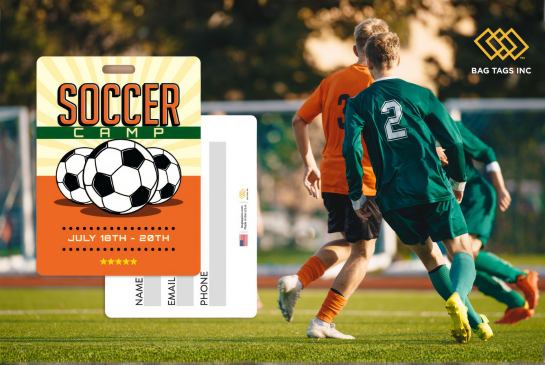
Event-style soccer tags act as both gear IDs and keepsakes. For large events:
- Use a common front design with event branding and year.
- Personalize with names or jersey numbers where budget allows.
- Put QR codes to schedules, brackets, or event recaps.
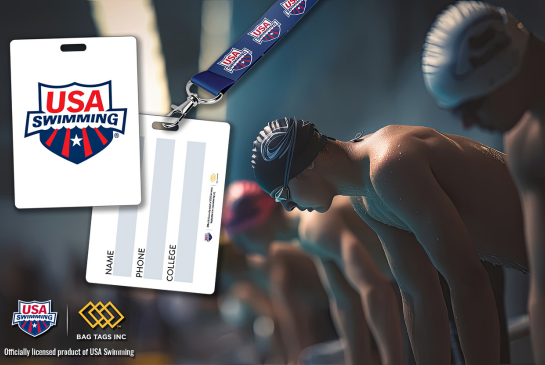
For certain formats, shield-shaped tags originally used for other aquatic sports can be repurposed as striking soccer keepsakes. The USA Swimming Shield Tag product shows how a bold silhouette and focused layout become an instant souvenir while still working hard as an ID tag.
Coaches, Staff, and Referees
Staff need tags that do two jobs:
- Help them spot key kits and cases quickly
- Support credentials around the facility
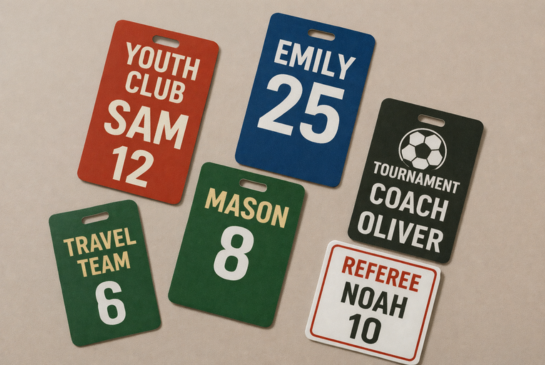
For bags and cases, use the same plastic tags and loops as the players, with roles clearly printed: COACH, TRAINER, REFEREE, SITE LEAD.
For access control, pair bag tags with lanyards that hold badges or credentials:
- Print staff names and roles on the tag.
- Use lanyards in role-specific colors so volunteers and officials are easy to spot.
You can explore lanyard options that match your tag program on the Lanyards page.
How To Roll Out A Soccer Bag Tag Program In 6 Steps
The fastest way to avoid proof revisions and last minute panic is to treat your tags as a small system rather than a one-off order. The process is straightforward.
1. Decide who and what gets tagged
List your audiences:
- Players
- Coaches and trainers
- Referees and staff
- Shared equipment and ball bags
- Travel luggage for tournaments
Decide which groups share one layout and which need their own variant.
2. Lock your layouts and brand rules
Before you think about names:
- Choose one tag size and orientation.
- Fix logo position and minimum type sizes.
- Decide where QR codes will live.
Bag Tags provides free Templates and Guides that match their die lines, which helps your designer get the layout right the first time. You can download them from the Templates and Guides page.
3. Choose finishes and loops by environment
Use one simple chart:
- Player bags: glossy with clear loops or matte with clear loops
- Shared equipment: matte with stainless loops
- Travel luggage: matte for checked, glossy for carry-on, both with stainless loops
Pick once, apply everywhere. This 80/20 choice saves budget and reduces confusion when you reorder.
4. Prepare clean data for personalization
Use a spreadsheet with columns such as:
- First Name
- Last Name
- Number
- Team or Program
- QR Code URL (for personalized QR destinations if needed)
Standardize casing and spelling so that what prints on the tag feels consistent from player to player. Watch for very long names and plan how they will wrap or abbreviate without shrinking type too much.
5. Review proofs the way tags will be used
When you receive your digital proof:
- Print it at actual size.
- Stand under bright light and hold it at arm’s length.
- Scan the QR with different phones.
- Imagine pulling a bag out of a pile in a hurry.
If you squint or tilt your head to read it, increase contrast or type size before approving.
6. Plan how you will hand tags out
Tags only help if they make it onto bags.
- Sort alphabetically with divider cards by team or age group.
- Hand tags out at a parent meeting, picture day, or kit pickup.
- Keep a small buffer of extras for late registrations or lost tags.
For broader ideas on how tags, credentials, and lanyards support events from youth tournaments to professional competitions, you can look at the athletics overview on our athletics page.
Frequently Asked Questions About Soccer Bag Tags
Do we really need soccer bag tags for every player?
You do not have to, but giving every player a tag keeps things consistent, reduces confusion at tournaments, and reinforces team identity. Most clubs find that once one age group starts using tags, others ask for them the next season.
Are soccer name tags only for player bags?
No. The same layout works on:
- Ball bags
- First aid kits
- Coach clipboards and tactical boards
- Lost and found bins at complex headquarters
Anywhere you want a quick “this belongs to” signal, a tag helps.
How many tags per bag are ideal?
One on the main handle is usually enough for player backpacks. For travel luggage and high value equipment cases, consider two: one outside and one inside the main compartment as a backup.
Will the printed plastic tags hold up in rain and mud?
Yes. Bag Tags focuses on durable plastic tags in glossy or matte finishes that are built for weather and repeated use in sports environments. Wipe them with a soft cloth and mild soap when needed.
Can we reuse tags next season?
If your design does not include a specific year and players stay in the same program, you can absolutely reuse tags. Many clubs print a fresh design only when players change teams or when a major rebrand happens.