Athletic Bag Tags: Team Branding That Keeps Gear Organized

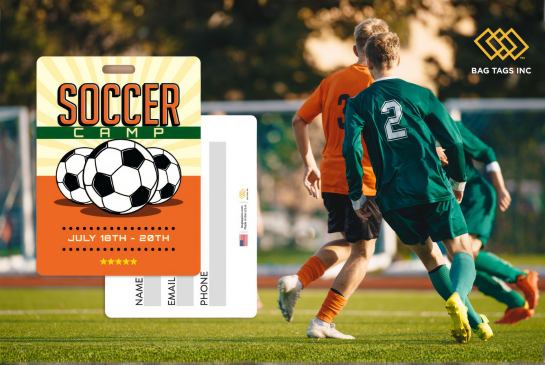
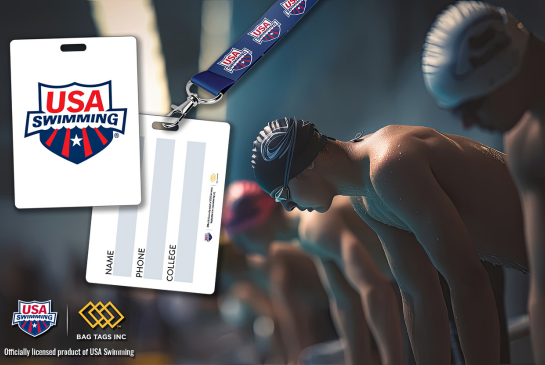
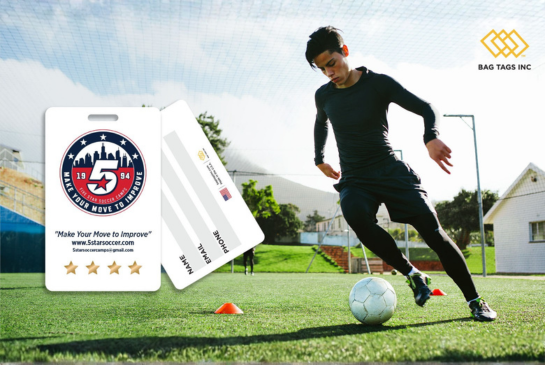
When you’re staring at a pile of identical black duffels, the most useful thing a tag can do is team branding. Strong branding makes gear easy to spot, easy to sort, and harder to mix up when every bag looks the same.
That same branding is also why athletic bag tags work as a budget-friendly event giveaway and keepsake. Athletes actually keep them on their bags long after the season, meet, or tournament is over.
Team branding is the point, and organization is the payoff
A good sports tag is not trying to be clever. It is trying to be obvious.
When you lean into branding, you get three practical wins:
- Instant identification: your team’s gear stands out in a crowd
- Fast organization: bags can be sorted by team, squad, bus, or group in seconds
- Built-in keepsake value: athletes keep branded tags because they feel like part of the season
If you want tags that work in real sideline conditions, design for quick recognition first, then layer in details.
How athletic bag tags keep teams organized when bags look the same
Most team gear problems are not dramatic. They are routine:
- The wrong duffel goes on the wrong bus
- A ball bag ends up at the far field
- A rolling case gets grabbed by the wrong parent at pickup
- The equipment bin goes back to the wrong storage room
Branding-led tags solve this by creating a consistent “visual system” across every bag.
The simplest organization system that works
Use a consistent structure across all tags:
- A bold team mark that can be recognized from several feet away
- One large variable line (name, number, role, or group)
- Optional group identifiers like grade, squad, or event group using a color block or short code
This turns a pile of similar bags into something your staff can sort quickly without reading tiny text.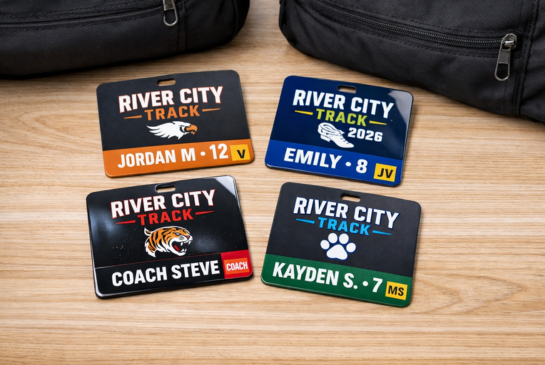
Branding that reads fast: what to include (and what to avoid)
If you want the branding to do real work, build the front of the tag around recognition speed.
Elements that help bags stand out instantly
- A large logo or mascot mark that is visible at a glance
- A high-contrast background that does not fight the text
- A short team name or program name that can be read from a few feet away
- A simple season marker like “2026” if tags double as keepsakes
Things that usually slow down recognition
- Too many small sponsor marks on the front (move extras to the back or a linked QR page)
✦ Low-contrast color combinations that look fine on screen but disappear in real lighting
✦ Over-decorated backgrounds that reduce clarity for names and numbers
✦ Tiny lines of text stacked under the logo
A good mental test is “two seconds from arm’s length.” If the logo and team name do not pop in two seconds, simplify.
Durable materials: what matters for athletics
Bag Tags Inc focuses on printed durable plastic tags that can handle the kind of handling that destroys paper labels and soft add-ons:
✦ Dropped on concrete and gym floors
✦ Dragged across turf and track surfaces
✦ Exposed to sweat, rain, and humid pool-deck conditions
✦ Re-handled by staff and volunteers during travel and events
If your design stays readable and your attachment stays secure, the system works all season.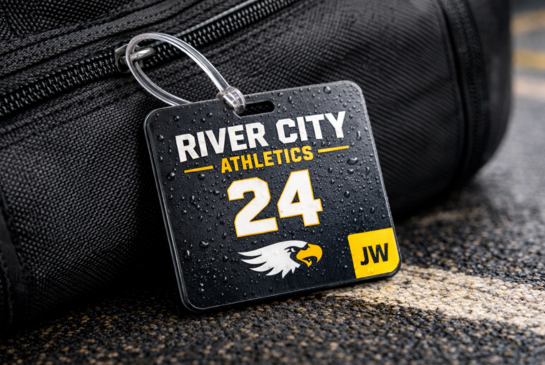
Glossy vs. matte: pick the finish that keeps branding readable
Both finishes are water and weather resistant. The real question is glare and legibility.
Choose glossy if you want:
✦ More pop in logos and bold team colors
✦ A more “keepsake” look for commemorative designs
✦ High visibility on darker bags
Choose matte if you want:
✦ Less glare under stadium lights, gym LEDs, and direct sun
✦ Better readability when tags are read quickly in motion
✦ A more “equipment label” feel while still looking premium
Simple rule: If tags will be read under harsh lights or bright sun, matte is usually the safer readability choice.
Clear loops vs. stainless loops: match the attachment to the chaos
Your attachment choice is where durability becomes real.
Clear plastic loops are great for:
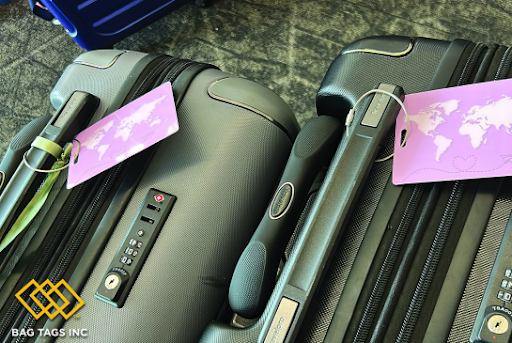
✦ Player backpacks and duffels that stay with the athlete
✦ Daily practice bags
✦ Fast distribution and quick installs
Premium stainless steel loops are best for:
✦ Checked luggage and tournament travel bags
✦ Rolling cases and shared equipment bins
✦ Situations where staff handle gear repeatedly
If your program travels, stainless loops are the easiest upgrade that reduces replacements.
For the standard format most teams start with, see the Luggage Tag product page.
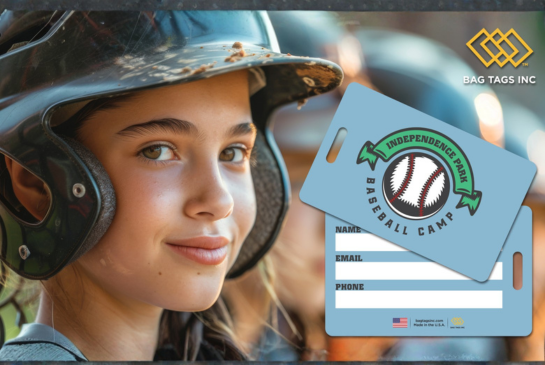
The branding-first layout that still leaves room for names and numbers
Here’s a layout that keeps the team identity front-and-center while staying functional:
✦ Top third: team branding (logo, wordmark, mascot, year if relevant)
✦ Middle: the “big read” (name, number, role, or group)
✦ Bottom corner: optional QR code, placed consistently
Design rules that make tags work in a pile of bags
✦ Use high-contrast text against a simple background
✦ Use 1 to 2 fonts maximum
✦ Make the logo and the big read the largest elements
✦ Keep the design clean so branding reads instantly
Privacy note: Avoid printing a full home address on the outside of a tag. For returns, a name plus a phone or email, or a QR-based option, is usually enough.
Event giveaway and keepsake: why tags outperform most swag
For meets, tournaments, and distance events, branded tags hit a sweet spot:
✦ They are easy to distribute
✦ They feel personal when you add a name, bib, or team group
✦ They live on bags for months or years, not minutes
This is why tags show up as a practical giveaway for packet pickup and team check-in, especially for Marathon and distance events and large scale entry environments like Stadiums and venues.
A simple “event giveaway” playbook
If you’re planning tags as a giveaway, decide which type you are making:
✦ Commemorative tag: event name + year + logo, minimal variable data
✦ Personalized tag: athlete name or bib, plus event branding
✦ Hybrid: branding on the front, variable data on the back to keep the front clean
Then match distribution to the experience:
✦ Packet pickup and check-in: hand out at registration tables, grouped alphabetically
✦ Team coaches: deliver in team bundles so coaches can distribute in minutes
✦ On-site volunteers: use clear labeling on boxes by group or letter range
This is also where matte can shine, because glare is common at expo halls and outdoor check-in tents.
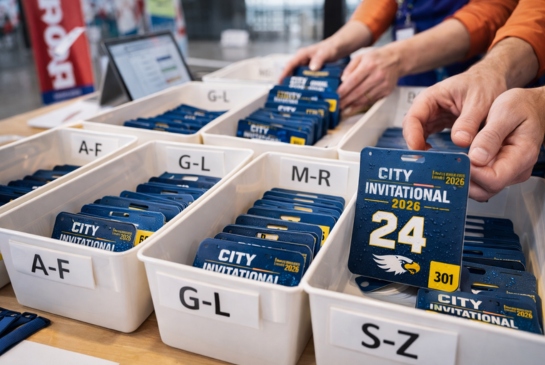
Variable data: make every tag feel personal without creating design chaos
Variable data is how you keep one strong branded design while personalizing hundreds of tags.
Common athletics uses:
✦ Player names and jersey numbers
✦ Squads, grades, or event groups
✦ Roles like COACH, TRAINER, OFFICIAL, VOLUNTEER
A clean roster workflow
✦ Lock the design first (branding zone, name/number zone, QR zone)
✦ Prepare a spreadsheet with clean columns (First, Last, Number, Group, Role)
✦ Proof the longest names and biggest numbers before final approval
✦ Keep one master design and vary only the data
To speed this up, start with Templates and Guides.
Optional: add group-level “sorting cues” without clutter
If you need faster sorting at scale, add one cue that is consistent across all tags:
✦ A short code like “V”, “JV”, “MS”
✦ A role label like “COACH” in a single bold block
✦ A small icon for equipment types (balls, uniforms, medical, tech)
Keep it consistent across the whole set so staff learn it once and use it all season.
QR codes: useful for sponsors, programs, schedules, and recovery
QR codes are optional, but when you use them, give them a real job:
✦ Link to a team hub (schedule, facility map, contact info)
✦ Link to live results, a tournament program, or event updates
✦ Link to a sponsor page that supports fundraising
✦ Provide a simple recovery path if gear gets separated from its owner
Keep the destination clean and mobile-friendly so the scan feels worth it.
QR code placement tips that improve real-world scanning
✦ Keep the QR code in the same corner on every tag
✦ Do not shrink it too far to “make room” for art
✦ Leave breathing room around it so phones can focus quickly
✦ Test it on a bag in the lighting you actually have (gym, sun, stadium lights)
If scanning is part of the plan, treat it like a feature, not a decoration.
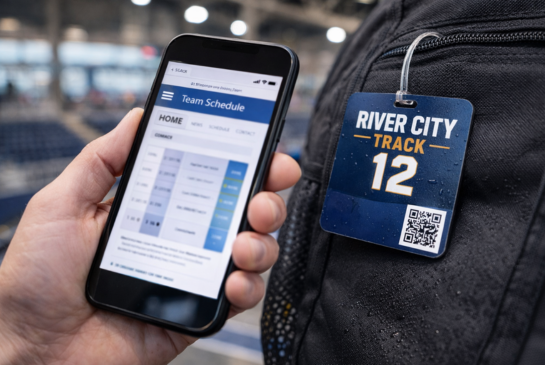
Use cases that fit athletic bag tags best
Athletics programs (track, cross country, training groups)
If you want examples built around real sports needs, start here: Athletics use case.
Common setups:
✦ Athlete bags: glossy or matte + clear loops
✦ Shared equipment: matte + stainless loops
✦ Travel gear: matte + stainless loops
Schools and universities
Branded tags often expand beyond a single team into broader programs:
✦ Club sports
✦ PE and athletics departments
✦ Campus events and student travel
For campus-wide use cases, see Schools and universities.
Staff and volunteer visibility
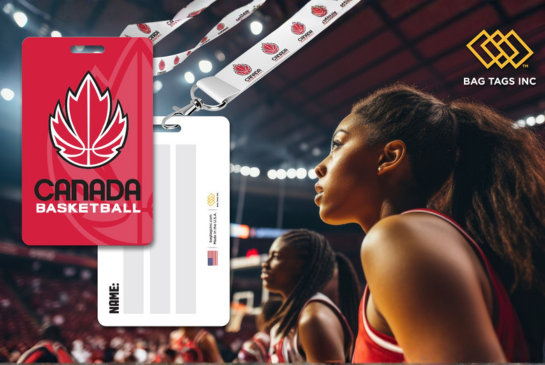
Bag tags are great for gear identification. For people identification and event operations, credentials paired with lanyards are often the better tool.
If you need lanyards for staff roles and visibility, start here: Lanyards.
Quick-start: the simplest system that keeps teams organized
If you only do five things, do these:
✦ Build one strong branded template your program can reuse every season
✦ Make the logo and team mark the most visible element
✦ Use one large variable line (name, number, role, or group)
✦ Choose matte when glare is a problem, glossy when you want extra pop
✦ Choose stainless loops for travel and shared equipment, clear loops for daily player bags
That is enough to keep gear moving smoothly when everything looks the same.

Common mistakes that make athletic bag tags less effective
These are easy to avoid, and they matter more than most people expect:
✦ Branding too small: if the logo is tiny, the tag becomes a slow-reading label instead of an instant identifier
✦ Too much text on the front: the tag stops working as a quick sorter in bag piles
✦ No contrast: colors that look great in a design file can disappear on a dark bag in bright light
✦ Too many versions: multiple layouts create confusion for staff and slow down approval and distribution
✦ Ignoring how the tag will hang: if the key information ends up twisting against the bag, move it higher and keep the layout simple
If you fix only one thing, fix contrast and logo size. That is where most of the real-world gains come from.
FAQ: Athletic bag tags
What should we put on athletic bag tags?
Start with branding, then add one large variable line like name or number. Add minimal contact info or a QR code if recovery matters.
Are matte tags less durable than glossy tags?
No. Both finishes are water and weather resistant. Choose based on glare and readability.
When do stainless loops matter most?
Checked luggage, rolling cases, shared equipment, and anything handled by staff or travel systems.
Do bag tags work as event giveaways?
Yes. Branded tags are easy to hand out and tend to stay on bags, which makes them a practical keepsake compared to disposable swag.
Are bag tags the best option for staff access control?
Usually no. For identifying people and roles, credentials and Lanyards are typically a better fit.