Bag Tags for Sports: A Practical Guide for Teams, Schools, and Clubs

|
What You’ll Learn |
Gear moves fast in sports. Players toss duffels into piles, coaches hustle between fields, and volunteers check in hundreds of names in minutes.
Bag tags for sports keep that motion organized. They speed up identification, cut lost-and-found chaos, and make routing and returns simple without adding work for already stretched staff.
This guide shows you how to choose, design, and roll out durable plastic bag tags that hold up to travel, weather, and tournament pace. You will see what to print, which finish to pick, and how to attach them. You’ll also learn how to use QR codes to promote your website, sponsor pages, or a tournament program.
What a Sports Bag Tag Actually Needs to Do
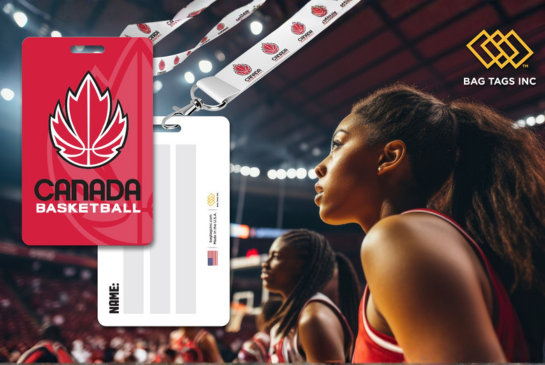
A sports bag tag is first and foremost team branding. When every bag on the sideline looks the same, a bold tag makes your colors stand out and helps everyone spot the right gear quickly.
It also works as an inexpensive event giveaway and keepsake that players are happy to keep using after the season.
A good tag also helps busy people make correct decisions at a glance.
From several feet away, a coach should be able to confirm the bag, the role, and any routing instructions.
Materials Bag Tags Makes, and Why That Matters
Bag Tags focuses on printed, durable plastic tags. The product line is intentionally simple so teams can standardize and reorder with confidence.
- Finishes: glossy or matte
- Attachments: clear plastic loops or premium stainless steel loops
- Print: logos, names, numbers, short routing lines, and QR codes.
Bag Tags does not offer engraving, embossing, NFC tap features, or neon specialty effects. If you want a smart feature, use a printed QR code that links to a secure recovery or roster page you control.
Glossy vs. Matte for Sports
Both glossy and matte finishes are fully water and weather resistant, so the difference comes down to look and glare.
Teams that deal with rain, snow, or splash zones appreciate how fast a glossy tag dries.
Matte cuts glare in harsh sun and under bright lights.
If volunteers or staff scan QR codes constantly at gates or field entries, matte avoids reflections that interfere with cameras.
For daytime field sports and credential-style tags choose matte when you want a writable surface so athletes can add their contact information directly on the tag.
Clear Plastic Loops vs. Stainless Steel Loops
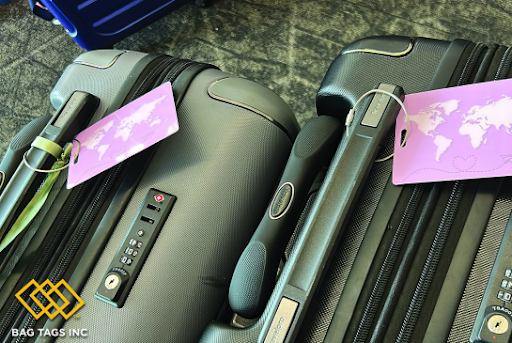
Clear plastic loops are flexible, lightweight, and quiet on metal bleachers.
They are easy to issue in bulk to youth programs or schools and they sit nicely through zipper pulls and soft handles. For backpacks, duffels, and camp kits, clear plastic loops are the simple, affordable choice.
Stainless steel loops bring high tensile strength.
They resist abrasion against bus racks, ski carriers, and locker hooks, and they do not pop when a heavy duffel gets yanked.
If your program flies often, or if you are tagging sticks, skis, stick bags, or hard cases, stainless steel provides real peace of mind. They also pair well with credentials that should stay attached all weekend.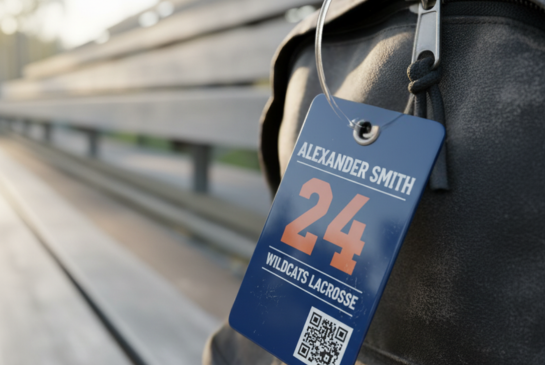
What to Print on a Sports Bag Tag
Front Side
- Club, tournament, or brand logo
- First initial and last name in large type
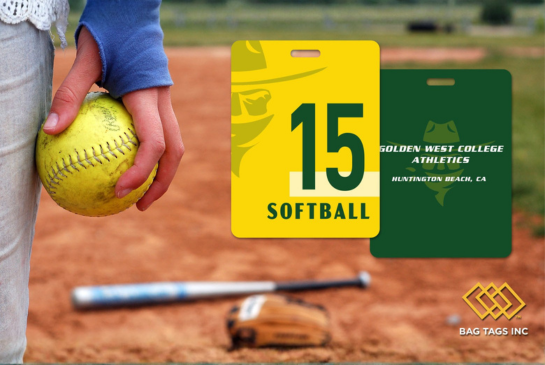
- Jersey number or roster ID sized for 10 to 15 foot readability
- Team name, level or age bracket, and season
- A strong color band if your event assigns bracket or bus colors
Back Side
- QR code that links to sponsor pages, event info, or team resources
- Short routing line such as Bus B, Room 412, or Wave 2
- Program contact, for example a team admin email
- Optional medical or allergy icon if your organization allows it
- Writable area on the back so the athlete can add their own contact information
For privacy, do not print a full home address on the outside of a tag. It is better to route recovery through a QR page or a central team contact.
Design Rules That Hold Up in Real Sports Life
Start with size and contrast.
Names should be large enough to read at a glance. Numbers should be even larger if they are the primary sorting signal.
Place visual anchors where the hand naturally lands.
If numbers drive sorting, put the number in the top corner most athletes grab first. If you use color for routing, make the band thick and consistent across teams and events.
Around the QR code, leave enough margin so phone cameras are able to scan quickly.
A quick test beats guesswork. Print the design at actual size on a home printer, tape it to a bag, step back 10 to 15 feet, and ask someone to read the name and number. If they hesitate, increase size or fix contrast.
QR Codes for Sports Programs
QR codes turn a rugged plastic tag into a simple way to drive people to your digital content.
One scan can take athletes, families, and fans to your website, a tournament page with schedules and maps, or sponsor landing pages.
Most programs use QR codes this way for event information and sponsor value, not as a recovery tool.
Because you can update the destination page over time, the same printed tag keeps working across seasons and events.
Numbering, Roles, and Sponsor Panels
Equipment rooms run on patterns.
If you number tags, keep sequences per team so managers do not collide across the program.
Role bands help at events. A bold color with a short label such as COACH or MEDICAL means wayfinding and access checks happen faster.
Sponsors deserve their slot, but if you feel it’s necessary, you can keep logos secondary to identity and recovery. If your tournament assigns pools or waves, reserve a clear spot where that information never competes with the player’s name or number.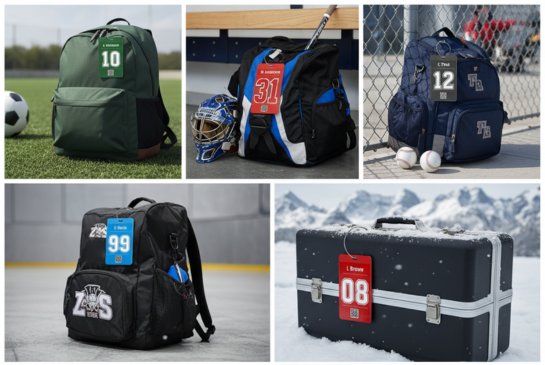
Sport-By-Sport Recommendations
Small adjustments by sport help the same tag setup fit very different bags and environments.
Soccer, Lacrosse, Field Hockey, Volleyball
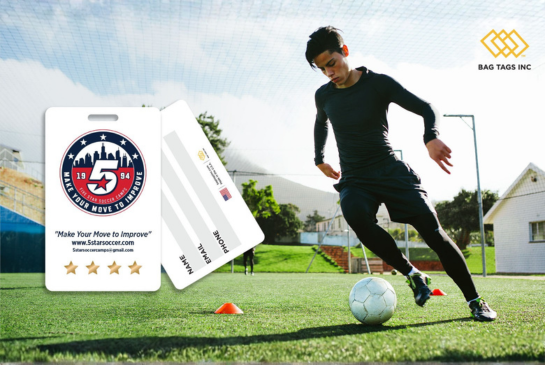
Daytime fields can be tough for glare, so many programs choose matte for these sports, even though glossy is just as durable. Clear loops work well on backpacks and duffels, while stainless loops are an upgrade for shared team bags. Keep the last name big, the number bigger, and use the QR to send families to schedules, field maps, and sponsor info.
Hockey
Everything around hockey gear is wet and heavy. Both glossy and matte tags hold up equally well, so choose based on how you want them to look. Glossy keeps team colors bold on dark bags, while matte softens glare off bright ice and glass. Stainless steel loops are the safest choice for goalie bags, stick bags, and travel cases since they will not pop on hooks or bus racks. Use the QR to send families to the team page with schedule, rink maps, and sponsor offers.
Baseball and Softball
Both finishes are just as durable on the diamond, so pick matte if you want less glare in direct sun or glossy if you want extra pop on bat packs. Clear loops work well on individual player bags, while stainless loops hold up on shared gear bins and trunk handles. The QR can point to the season schedule, field map, and any partner or sponsor pages you want parents to visit.
Swim and Water Polo
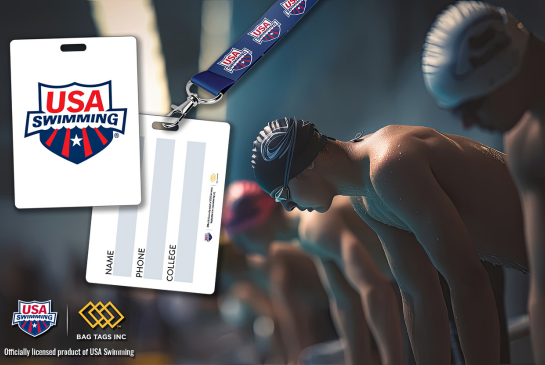
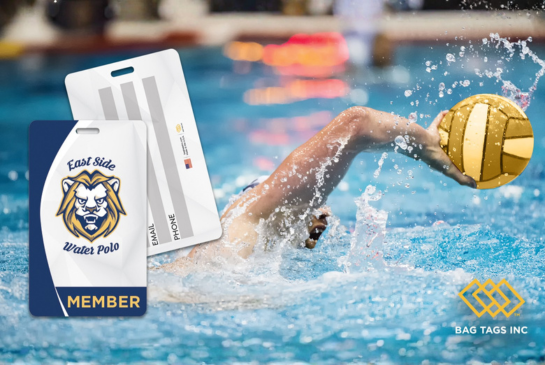
Pool decks are wet all day, and both glossy and matte tags handle that without a problem. Glossy sheds water quickly and looks sharp against bright team colors, while matte is useful if you prefer a softer finish or want a write-on area on the back. Clear loops thread easily through wet handles, and stainless loops are an option for heavier team gear. Set the QR to meet information, heat sheets, venue details, or sponsor messages.
Ski and Snowboard Teams
Snow and slush are not an issue for either finish, so choose glossy or matte based on color and glare. Glossy stands out against dark cases, while matte can help when tags are in bright mountain light. Stainless steel loops are the go-to for hard cases and roof racks because they stay secure in transit. Aim the QR code at trip information, mountain or trail maps, and sponsor offers that riders can scan while they travel.
Football and Cheer
Sidelines and practice fields are bright, but both finishes are equally tough. Matte can make names and numbers easier to read in sun, while glossy can make dark team colors stand out more. Use stainless loops on heavy gear trunks and coach cases, and clear loops on individual player or cheer bags. Point the QR to practice schedules, game-day info, and key sponsor pages so families have everything in one place.
Event and Credential-Style Tags
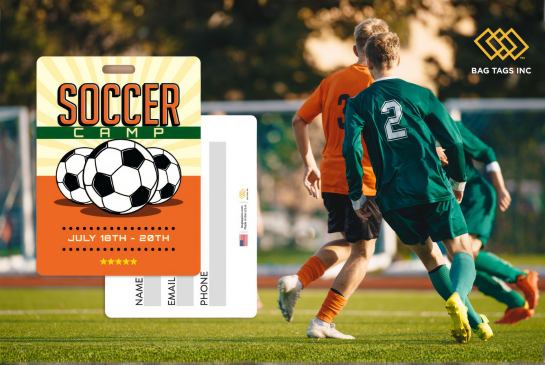
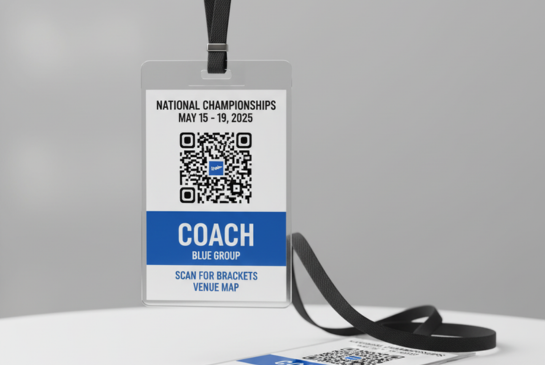
Summer camps, showcases, and tournaments all benefit from a larger credential format. The layout should be consistent and easy to scan with your eyes.
Feature the event logo at the top, followed by the event name and dates, then use a bold bottom band to show the credential type such as PLAYER, COACH, OFFICIAL, or STAFF and any color group or wave.
The reverse hosts the QR that opens brackets, venue maps, and emergency info. If door or gate scanning is frequent, use matte so barcode and QR readers cooperate.
Rollout Checklist for Coaches and Equipment Managers
Decide which finish and loop each team or role will use. Pick a consistent placement for name, number, and routing lines. Next, confirm the QR flow. Pick a recovery or roster page, build a short link you can manage, and test it on common phones.
Create one player sample and one staff sample, then print them at full size. Check readability from 10 to 15 feet and scan the code in sun and shade. When you are happy, place the order by grouping.
Attach tags at the first full team meeting. Show families how the QR recovery works and where to report a find.
For maintenance, keep a small kit with spare loops and a few extra tags. If schedules change, update the QR destinations and you are back in sync without reprinting.
Quick Reference
- Lock standards: finish, loop, layout
- Build QR destinations and short links
- Print full-size proofs and test in real light
- Order by team and role with 10 percent spares
- Issue at a team meeting and train briefly
- Maintain a replacement kit and update links
Care and Durability Tips
Durable plastic tags hold up well, and a few habits extend their life.
Wipe tags with mild soap and water after muddy events. During laundry day, look over the loops and swap any that show abrasion. Avoid harsh solvents on printed areas so colors stay true.
If you plan to write sizes or quick notes, choose a matte finish and use a fine tip permanent marker.
Order Preparation: Files, Proofs, and Quantities
Provide vector logos when you have them, or PNGs at 300 dpi when you do not.
Share a roster spreadsheet with names, numbers, and routing lines exactly as you want them printed. If you mix finishes or attachments by role, make that clear in your order.
When proofs arrive, check spelling, contrast, and QR placement. Order extras for coaches, team managers, and replacements.
Ready to Set Up Bag Tags for Your Program?
Start with a weekend pilot for one team. Choose a finish and loop that match how your gear moves, lock your layout, print a small run, and test in real light with real people.
When the tags sort a pile in seconds and the QR works the first time, roll it out across the program. Coaches, volunteers, and families will notice the difference in the first ten minutes of the next check-in.
Frequently Asked Questions
Can we include personal phone numbers on tags?
You can, but it is better to route recovery through a QR page or a team admin contact so families do not expose private numbers.
Do you support NFC tap tags?
No. Bag Tags focuses on printed plastic tags with optional QR codes. QR works across devices without special chips.
Which finish scans better for QR codes?
Both scan well when designed correctly. Matte reduces glare on fields and under lights. Glossy sheds water around pools and winter sports. If you are unsure, test both in the actual locations where you will scan.
Which attachment is best for heavy travel teams?
Use stainless steel loops for heavy or hard-sided bags. Use clear plastic loops for lighter duffels and youth packs.
Can we add sponsor logos?
Yes. Keep the sponsor panel secondary to identity and recovery. A small logo and a QR link to a sponsor page is enough.
Do you make engraved or embossed tags?
No. Bag Tags prints durable plastic tags in glossy or matte finishes, with clear plastic or stainless steel loops, and supports printed QR codes.
Can we number tags and also print names?
Yes. Put large high-contrast numbers for sorting and use the name slightly smaller for confirmation.
What about stick, ski, or stick-bag tags?
Choose stainless loops and keep the layout compact so it will not snag. Place the QR away from edges that scrape.
Sample Layout You Can Copy
Think in layers.
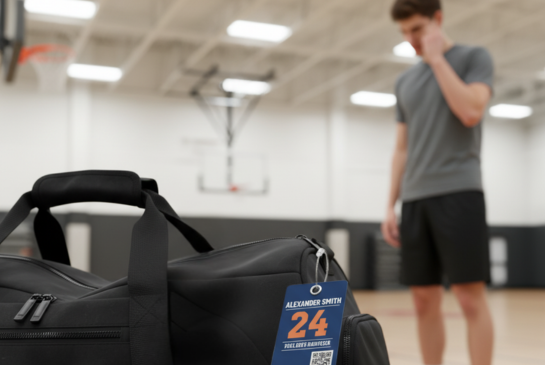
On the front, give the jersey number a prominent corner, put the name across the middle in a bold, readable font, and list the team, age group, and season near the bottom. Add a side band in the assigned bracket or bus color.
On the back, center the QR code with a clean margin, place a short routing line beneath it, and finish with a program contact. Print the layout at real size, tape it to a bag, and have someone read it from across the room before you order.